 nasbiphils@gmail.com
 +632 8810-5822
nasbiphils@gmail.com
+632 8810-5822
+632 8810-5822
nasbiphils@gmail.com
+632 8810-5822
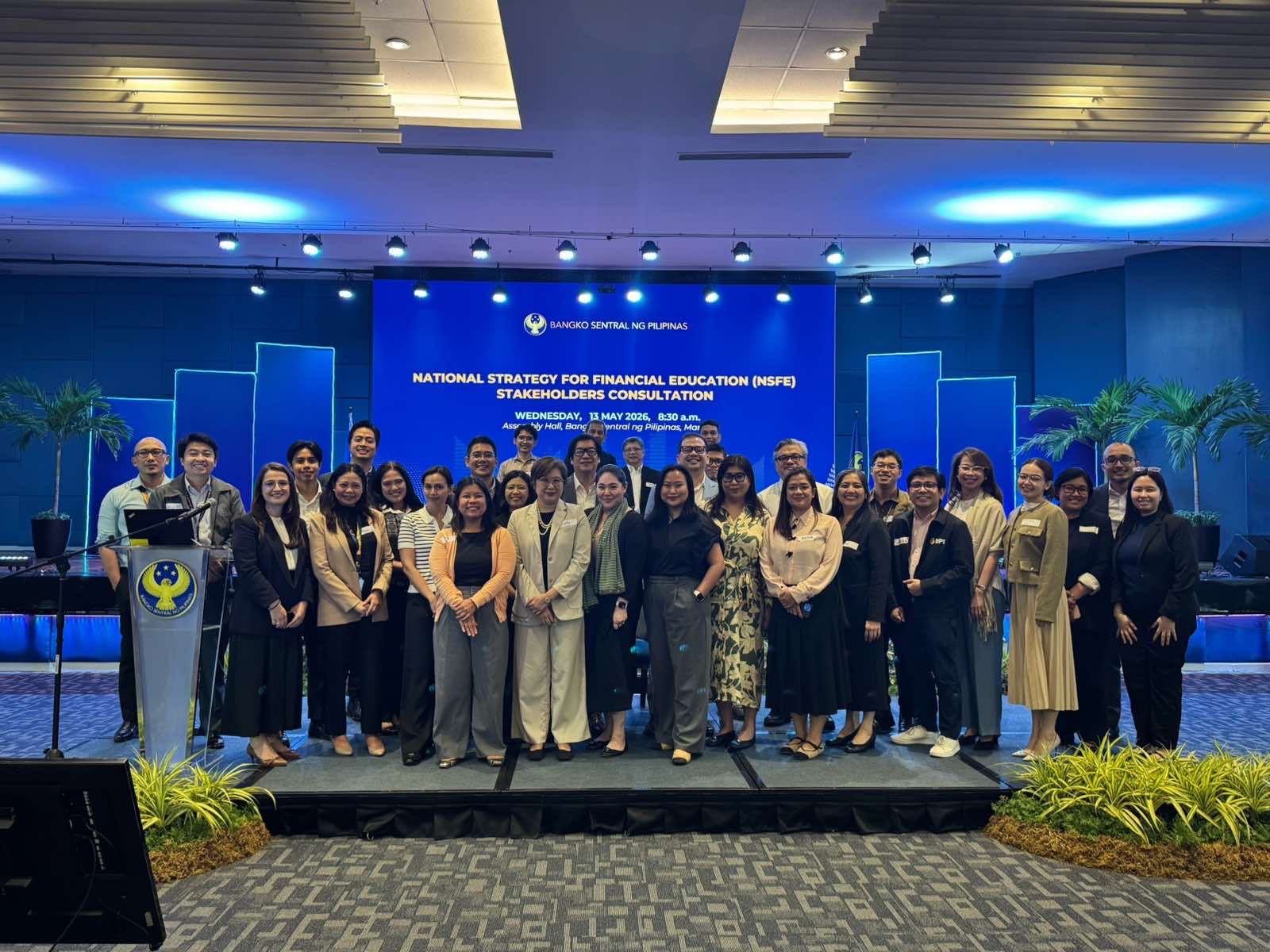
The National Association of Securities Broker Salesmen, Inc. (NASBI) participated in the National Strategy for Financial Education (NSFE) Stakeholders Consultation organized by the Bangko Sentral ng Pilipinas (BSP) on 14 May 2026 at the BSP Assembly Hall.
The consultation brought together representatives from government agencies, financial institutions, industry associations, academe, and development partners to discuss the formulation of the country’s next National Strategy for Financial Education. Anchored on the vision of “Building Financial Well-being Through Coordinated Action,” the consultation emphasized the importance of collaboration in equipping Filipinos with the knowledge, skills, and confidence needed to make informed financial decisions.
Strengthening Financial Inclusion Amid Rapid Digital Growth
The BSP presented encouraging developments in the country’s financial inclusion efforts, particularly in the digital finance space. E-money transactions have grown significantly, increasing from 221.7 million in 2020 to 632.4 million in 2023, reflecting the increasing adoption of digital financial services among Filipinos.
Results of the 2025 Basic Financial Literacy Survey also showed that 75% of Filipinos are able to answer basic financial literacy questions correctly. Despite this progress, only three out of every ten Filipinos are considered financially resilient, highlighting the need to transform financial knowledge into sound financial habits and long-term financial security.
Addressing Emerging Financial Risks
The consultation also underscored the challenges accompanying the rapid growth of digital financial services. According to the BSP, 77% of Filipino adults have encountered financial scams, with each individual exposed to an average of 239 scam attempts in 2024. Estimated financial losses due to scams reached ₱230 billion during the year.
Participants likewise noted that e-money onboarding has become one of the country’s largest financial education touchpoints. However, existing onboarding processes remain largely focused on regulatory compliance rather than strengthening consumers’ financial capability and decision-making skills.
These findings reinforce the importance of integrating financial education, financial inclusion, and consumer protection as complementary pillars of financial well-being.
BSP’s Three Financial Pillars
To guide its initiatives, the BSP continues to anchor its programs on three key pillars:
Financial Inclusion – expanding access to and meaningful usage of financial services;
Financial Education – building financial capability and confidence; and
Financial Consumer Protection – promoting trust, fairness, and responsible financial practices.
The BSP also highlighted the strong foundations already established, including the integration of financial education into national development strategies, expanding financial education programs across sectors, digital learning platforms such as the BSP E-Learning Academy (BELA) and the TESDA Online Program (TOP), and growing partnerships among public and private sector institutions.
Strategic Priorities of the Updated NSFE
The updated National Strategy for Financial Education aims to help Filipinos achieve greater financial well-being by focusing on four key priorities:
Building assets and savings;
Strengthening debt management;
Enhancing emergency preparedness; and
Encouraging long-term financial planning.
To support these priorities, stakeholders identified five strategic objectives for the updated NSFE:
Support inclusive digital finance by increasing digital account usage, improving digital literacy, and reducing fraud.
Advance financial education and consumer protection to strengthen financial capability, encourage greater uptake of savings products, and improve consumer awareness.
Promote access to risk protection and social safety nets through higher insurance penetration, increased PERA enrollment, and greater use of formal financial accounts.
Strengthen agriculture and MSME financing by expanding access to formal credit, improving repayment performance, and increasing the use of digital financial tools.
Build a coordinated, accountable, and technology-enabled financial education ecosystem through stronger inter-agency collaboration, wider program reach, and improved monitoring and evaluation.
Looking Ahead
The BSP also shared the implementation timeline for the updated NSFE, with the final drafting targeted for June to July 2026, stakeholder mapping and approvals from August to October, and the official launch scheduled for November 2026.
As the National Association of Securities Broker Salesmen, Inc., NASBI recognizes that financial education is fundamental to developing informed investors, promoting responsible participation in the capital markets, and fostering long-term financial resilience. NASBI remains committed to supporting the BSP and fellow stakeholders in advancing initiatives that enhance investor education, strengthen financial capability, and contribute to a more inclusive and financially empowered Philippines.